Why Rewiring My Nervous System—Not Just Healing Trauma—Healed My IBS
- Healing IBS

- Jul 2, 2025
- 3 min read
Updated: Aug 2, 2025
For years, I believed that in order to heal my IBS, I had to heal my trauma. So I went deep—journaling, uncovering childhood memories, rewriting my story, working with my inner child, and using IFS (Internal Family Systems). I felt the feelings I hadn’t let myself feel in decades. I sat with grief, fear, and shame.
And to be honest, it was life-changing.
But it didn’t heal my IBS.
This is the part I rarely hear talked about in trauma-informed healing spaces: sometimes, even after the trauma is healed, the nervous system habits born from that trauma remain wired into our body.
Trauma vs. Habitual State
What I didn’t understand back then is that trauma is not just about the story or the past event—it’s about the state of the body. And over time, that state becomes a habit.
Even once the emotional charge around my childhood had dissolved, my body still lived in a state of hypervigilance and chronic fear. My nervous system had become fluent in survival.
The pattern had become automatic:
Rushing through everything to avoid disappointing anyone
Overanalyzing people’s moods to feel safe
Avoiding asking for help because I believed I was a burden
Feeling unsafe when I slowed down

A Childhood Rooted in Fear
Growing up, my mother’s emotions often felt unpredictable and explosive. I lived in a constant state of walking on eggshells. Her impatience and intensity taught me that being too slow, too needy, or too visible wasn’t safe. I remember struggling to learn how to conjugate French verbs and seeing the frustration in her face. That moment planted a belief: “If I’m slow, I’ll be punished.”
Over the next 20 years, that belief silently shaped my behavior. I rushed through life—from work to relationships to everyday tasks—not out of ambition, but out of fear. I bulldozed through things just to avoid the feeling of being “too much” or “not enough.”
And even though I eventually healed the emotional pain of those childhood experiences, I found myself still living in that rushed, hyper-alert state.
Healing Trauma Isn’t the Final Step
That’s when I realized: the trauma was healed, but the nervous system was still rehearsing the old patterns. The wiring was still there. And like any habit, it wasn’t going to disappear on its own.
Healing required me to consciously break the patterns that had once protected me.
When I noticed myself rushing, I paused and asked: “Is this fear or is this urgency real?”
When I avoided asking for help, I gently reminded myself: “I’m allowed to lean on others now.”
When I felt the urge to fix someone’s mood or anticipate their needs, I reminded myself: “I’m safe. I’m allowed to have boundaries.”
These weren’t quick fixes. They were daily practices—tiny, courageous acts of self-rewiring.
Rewiring My Way to Safety and Healing IBS
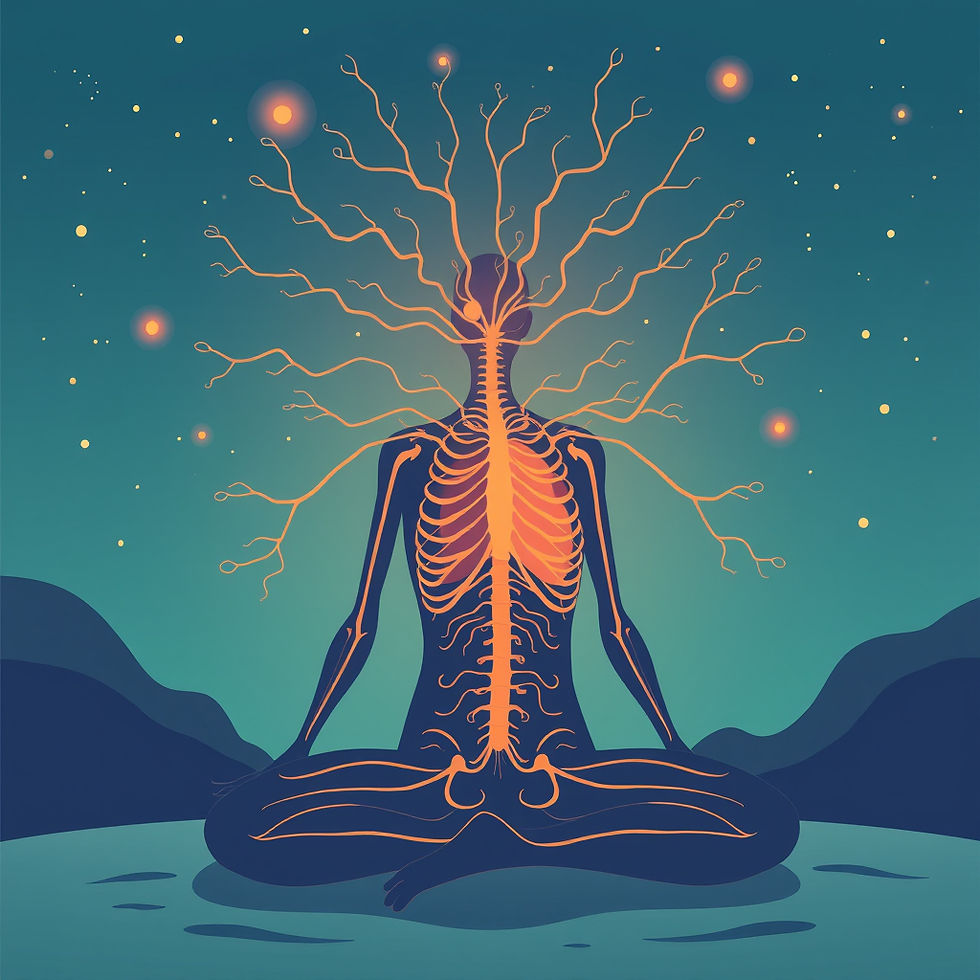
The truth is, trauma healing gave me access to safety. But rewiring my nervous system is what allowed me to live from that place of safety. The more I interrupted those habitual responses, the weaker they became. Each time I chose a new response—one that reflected my present-day truth instead of my childhood fear—I carved out a new pathway. One that led to calm, connection, and regulation.
And eventually, my gut noticed.
My IBS symptoms began to shift—not because I uncovered some hidden trauma I hadn’t processed, but because my body was finally learning a new way to be.
Final Thoughts
If you’ve been doing deep trauma work and still feel stuck in your symptoms, this post is for you. You’re not broken, and it doesn’t mean the healing didn’t work. It means your body might still be rehearsing old survival patterns. And those patterns can be unlearned—with time, with grace, and with conscious practice.
Healing trauma can be vital. But for many of us, it’s not the whole story. The nervous system must be rewired too.
And that’s where true, embodied healing begins.
With warmth and belief in your healing,
Cam


Comments