Understanding the Link Between Nervous System Dysregulation and IBS Chronic Symptoms
- Healing IBS

- Aug 3, 2025
- 4 min read
If you’ve been living with IBS, migraines, chronic fatigue, anxiety, or other chronic symptoms, it’s easy to feel like your body is failing you. That’s exactly how I felt for years.
The truth is, I didn’t even realize how bad things were—because fight-or-flight had become my normal. I thought the constant urgency, tension, and overwhelm were just part of life. It was only after I started healing that I realized how much energy I had been burning every single day just trying to feel safe.
If that resonates with you, you’re not broken. You’re not weak. You’re likely stuck in survival mode—and it’s not your fault.
The Missing Link: Your Nervous System
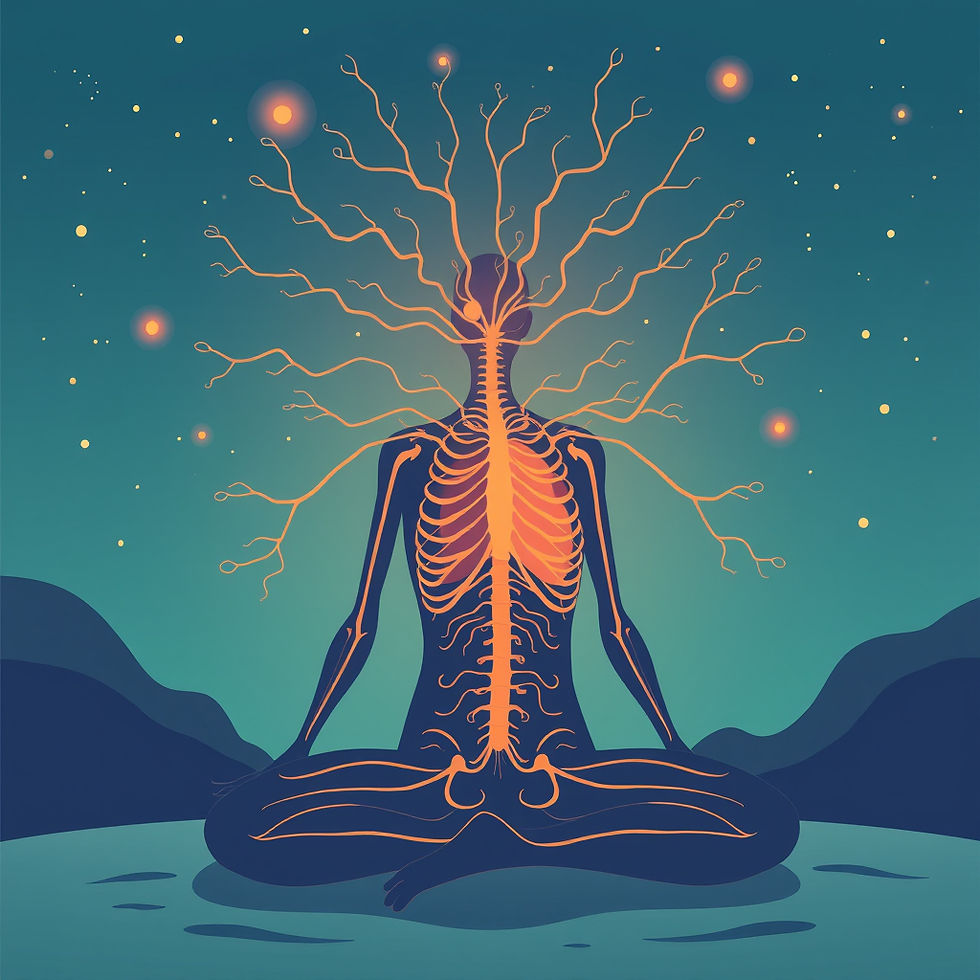
Your nervous system is the command center of your entire body. It influences everything—your digestion, hormones, mood, immune system, and even how you think. Its number one job? To decide if you’re safe or unsafe.
When it senses safety, your body can heal, rest, and thrive. When it senses danger, it shifts into survival mode: fight, flight, or freeze.
The problem is, when your nervous system has learned to live in survival mode—whether from stress, trauma, or repeated patterns—it doesn’t just “reset.” It stays there, and that becomes your new normal.
My Story: How My Nervous System Got Stuck
I grew up with an overworked, very impatient single mom who loved me but was quick to snap if I was slow, made a mistake, or just wasn’t perfect.
As a kid, my nervous system learned that the safest thing I could do was either:
Stay on edge, anticipating what might go wrong so I wouldn’t get in trouble
Or become as invisible as possible, so I wouldn’t attract negative attention
That state of hypervigilance—always scanning for danger—became my baseline. My body thought constant adrenaline was normal.
And this wiring didn’t just disappear when I grew up. It morphed into behaviors that followed me for years:
I couldn’t relax because calm felt unsafe—so I’d pile on more to-do’s until I felt overwhelmed again.
I chased perfection in school and work to avoid any possibility of criticism.
I obsessed over my appearance, thinking if I looked “perfect,” I’d be accepted.
I worried constantly about what people thought, leading to intense social anxiety.
From the outside, my life looked easy. I worked from home, had no kids, and a lot of flexibility. But inside, it was chaos:
Rushing through everything
Feeling uptight and on edge all the time
Overthinking every move
Then crashing and needing days of rest just to function
If you’ve ever wondered, Why do I feel this way when my life looks fine on paper?—this is why. Your nervous system doesn’t respond to logic; it responds to patterns.
Signs You’re Living in Survival Mode (Nervous System Dysregulation)
When your nervous system is dysregulated, you bounce between two extremes: hyperarousal (fight-or-flight) and hypoarousal (shutdown).
Hyperarousal (Fight-or-Flight) Feels Like:
Racing thoughts and inability to relax
Feeling rushed even when nothing is urgent
Tense body—tight jaw, shoulders up, clenched fists
Trouble sleeping
Overthinking and people-pleasing
Physical symptoms like rapid heartbeat, shallow breathing, IBS flares
Hypoarousal (Freeze/Shutdown) Feels Like:
Numbness or disconnection
Extreme fatigue, like you can’t move
Hopelessness or depression
Brain fog
Wanting to isolate from everyone
Many people live in this yo-yo cycle: frantic overdrive, then total crash. And because it becomes your norm, you might not even realize it—until you start healing.
Why Symptoms Become Chronic
Your nervous system is designed to keep you safe, but it can only handle so much before its “window of tolerance” narrows. This window is your ability to cope with stress and bounce back.

When stressors pile up—childhood conditioning, illness, perfectionism, life responsibilities—the nervous system starts spending more time outside that window, in survival mode. Over time, this creates:
IBS and gut issues
Hormonal imbalances
Chronic fatigue and pain
Anxiety and depression
Food sensitivities
Autoimmune conditions
Other chronic symptoms
You are not broken. Your body is protecting you the only way it knows how. But those patterns aren’t permanent—they can be rewired.
My Turning Point
After years of pushing through, I crashed. IBS ruled my life. My energy was gone. My world felt small and scary. I thought, Is this it for me?
Then I discovered nervous system work—brain retraining, somatic practices, polyvagal principles. Healing wasn’t about “calming down” or managing symptoms. It was about teaching my body that it was safe again.
Slowly, my system became more flexible. IBS episodes faded. Food was just food again. My energy returned. Most importantly, I stopped living like my life was an emergency.
Healing Is Possible (And It’s Not About Willpower)
Symptom management (resting, pacing, supplements) can help in the short term, but it doesn’t address the root: your nervous system patterns.
The goal isn’t to feel calm 24/7. The goal is resilience—a nervous system that can handle life’s ups and downs without spiraling into symptoms.
That’s what nervous system healing does:
Stress becomes temporary instead of overwhelming
Flare-ups don’t define your life
You feel safe in your own body
You’re Not Broken
Your symptoms are not random. They are learned survival responses. And what’s learned can be unlearned.
If this resonates with you, know this: you are not alone, and healing is possible. I’ve lived it. And if your body can learn to live in survival mode, it can also learn to thrive.
How can you start healing? Check out my five favourite regulation tools here.
And if you're looking for some personalized help book a 1:1 session with me here. I'd love to be part of your healing journey!
Much love,
Cam


Comments